
You Can’t Build on Dysfunction
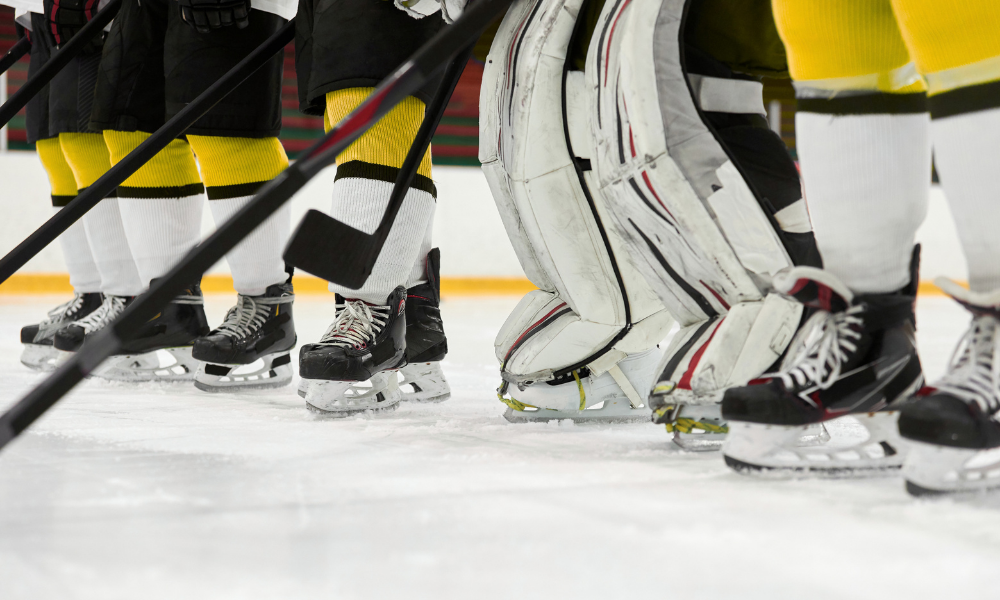
With the help of Brené Brown, and a very real experience at the hockey rink this past weekend, I’ve been thinking about change and HOW to make change happen.
Here’s the simplest way I can put it: You can’t build on dysfunction.
It sounds obvious. But when I look at how I’ve tried to create change in my own life, I usually focus on behaviours: adding a habit, removing a bad one, looking for a quick fix.
The problem is that behaviours exist inside a system.
And more often than not, the system wins.
I've talked about my experience as a hockey coach before, and sure enough, I was back on the bench this season, coaching our 10-year-old's hockey team.
I LOVE coaching, but this season felt different.
We had a really talented team, but our games followed a consistent pattern:
The other team would score once, and then they'd get 1, 2, or 3 quick goals right after
We'd lose our composure, stop passing, get frustrated, and the game would end in a loss
In spite of our talent and potential, we lost most of our games. If I'm honest, it stopped being fun for a lot of our players, and the coaches as well.
All season, we tried making tweaks: new drills at practice, players in different positions, and different line combinations. But week over week, the results stayed the same.
A few weeks ago, I took a step back and looked at what was happening in our games. This was our goalie's first season, so we knew supporting him was important, but that support just wasn't showing up in the games.
I realized that we had great systems in place for breaking out of our zone and scoring goals, but we hadn't built any sort of system for what mattered most: protecting our goalie.
The systems we had didn't address a core problem: protecting the goalie. So we tried a new system.
We oriented our practices, lines, and drills around this one idea. Before each game, players put their hands on our goaltender, a coach would yell "WHO DO WE PROTECT?!" and all the players would yell his name.
And here's what happened:
We stopped giving up breakaways
Our forwards backchecked their asses off
Our defense blocked shots and fired pucks into the corner when they were about to trickle across the goal line
And then, one more BIG thing started to happen.
Our goalie started making saves. BIG saves. When the puck got through, or a defender wasn't able to throw their body in front of a shot, he was there. Glove save, pad save, helmet save.
He transformed into an entirely different player.
In the last games of the season, each player in our dressing room started to believe that we could win. They started their own cheers. They started hugging our goalie (and each other) when a big save was made, or when we scored a big goal.
We entered championship weekend as the distant underdog and made it to the final against the top team and heavy favourite for the tournament...
And we won. Cue the goosebumps for any hockey fans reading this.
While I love a good hockey story, this isn't about the hockey or even about the win that team earned last weekend. This is about systems.
This idea actually clicked for me last fall reading Strong Ground.
On p.19 of the book, in reference to the responses leaders are taking to growing complexity in the world, she writes:
"...that scramble [to address complexity] leads down the dangerous path of attempting to build new capabilities on top of old dysfunction rather than assessing and developing core stability and functional strength first.”
Most of us default to changing behaviours. I know I do.
But the changes that actually stick, the ones that matter, come from stepping back and rethinking the system around them.
So if there’s something you want to change, try this:
What’s not working right now?
And what would it look like to fix that instead?
Because real progress doesn’t come from layering something new on top.
It comes from changing what’s underneath.