
Breaking the Script
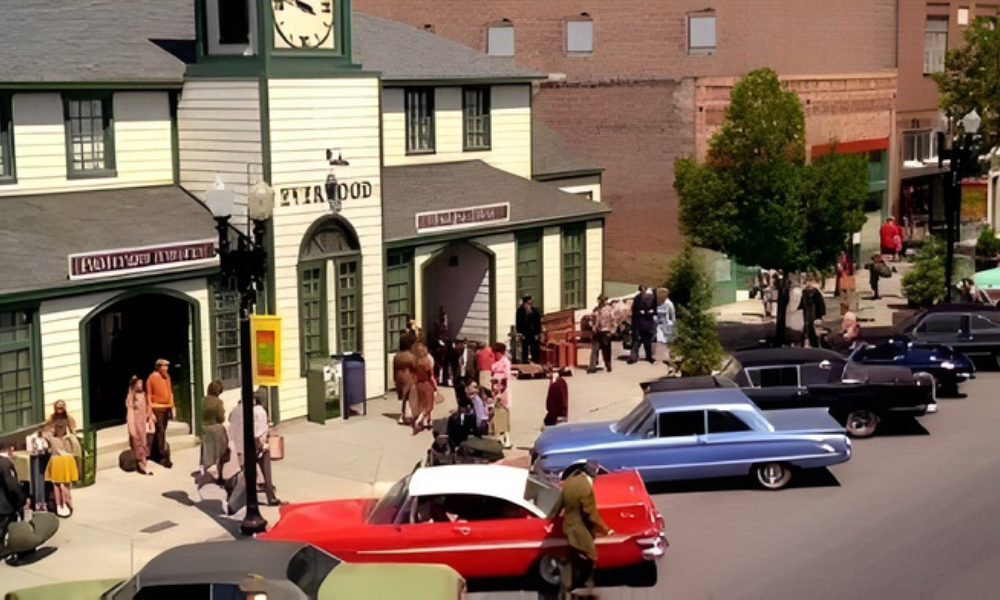
Whitney and I are watching a show called Everwood.
If you haven’t seen it, you should.
The main character is a doctor named Andy Brown. He’s a legendary brain surgeon from New York with a wife and two kids. The show begins as their lives take a sudden turn when Andy’s wife, Julia, dies in a car accident.
Andy and his two kids, 8 and 15, leave New York and settle in a small rural town called Everwood, nestled in the mountains of Colorado.
Prior to Julia’s death, Andy spent hardly any time with his family, prioritizing work above all else. It created a lot of conflict, especially with his 15-year-old son. But in Everwood, removed from the pace and pressure of his old life, his family becomes his top priority. Over the first two seasons (no spoilers—we’re not past that yet!), you can see it changing him.
It’s a beautiful show.
But until the Season 2 finale, I’ve always had a bit of a beef with it.
As Andy navigates life in Everwood, we watch his grief unfold in pretty typical Hollywood fashion. There are countless monologues about his sorrow, about how much he loved (and still loves) Julia.
“It should have been me, not her,” he says at least a dozen times.
Even if you haven’t seen Everwood, you’ve seen this story before.
Hollywood loves this version of grief. The one where loss defines the character, and where moving forward feels almost like a betrayal. It might be a powerful storyline, but it is an incomplete one.
When I experienced my version of Andy Brown’s story, I felt the same things. Loss, grief, sadness for myself, for my kids. I felt sad for our families and our friends too... but this is where things got tricky.
Anyone outside of my closest circle seemed to expect that I’d become Andy Brown. That I’d be stuck. That I’d drift. That I’d be consumed by sorrow.
And in that way, I was a disappointment.
Not because people didn’t care... it was because I didn’t match the version of grief they expected to see.
I wasn’t sad enough.
I wasn’t asking for enough help.
I wasn’t stuck.
They couldn’t understand.
In hindsight, I don’t think they were reacting to me as much as they were reacting to the version of grief they (and all of us) have been taught to expect.
Somehow, between the support of a great therapist, a small group of best friends, my family, and my kids, I kept moving forward.
Like Andy Brown, I shifted from a secondary parent to a primary one. My priorities changed. My capacity for empathy and compassion deepened in ways I couldn’t have understood before.
I became a better person because of it.
As uncomfortable as it is to say out loud, something terrible that happened to me also gave me something I didn’t have before. It gave me a chance to choose, intentionally, what kind of life I wanted to live and what kind of example I wanted to set for my kids.
We can often feel like the hardest part of change is taking on whatever is coming at us when it begins, whether that's experiencing a personal or professional loss, or something new, like deciding to start a business.
The reality is that the hard part comes after. It’s about sticking with the change you're looking to make.
When you start making those choices, you don’t just face the difficulty of change itself (which is hard enough). You also face the expectations of others.
Friends and extended family know us as we are. And even with the best intentions, they hold onto that version of us. So when we start to step outside of it, it can feel uncomfortable for them.
As a result, they push back, can get hurt, or even get angry. All of this happens not because they want to hold you back, but because, in their version of your story, you’re not supposed to change like that.
And this is where I think Hollywood quietly shapes more than we realize.
Stories like Andy Brown’s reinforce the idea that the past is something to hold onto. That what we had is better than what might be ahead. That staying connected to what was is a sign of love, loyalty, or depth.
So when we’re faced with the opportunity to change (whether it's a change we're taking on, or one that we're forced to navigate), we’re not just fighting against fear or uncertainty. We’re also pushing against a cultural narrative that tells us we shouldn’t.
Which is why you really need to watch Everwood. Specifically, the Season 2 finale of Everwood, where the writers break the script.
Throughout the episode, Andy talks about a recurring dream he's been having, where he sees his wife, Julia, sitting at the table with their kids back in New York. He stands there, watching them, smiling. All episode, he describes how this makes him feel like life was better the way it used to be.
But... as the show comes to an end, the whole dream plays out.
Andy walks into the restaurant and his family is there, laughing and happy... until the dream carries on and he sits down with them at the table.
His wife and son's smiles vanish, and they pull back from the table. Andy is late, once again, having run overtime at work. He forgot what they were celebrating and brushes it off, apologizing as he tries to move past it.
His wife stands up, takes the kids, and leaves him sitting alone at the table to order a drink by himself.
The writers break the script because they allow all of us to see the life that Andy Brown has been grieving for two whole seasons in an objective way.
In that moment, we all realize that the memory of what he had is far more generous than the reality of what it actually was.
As the screen fades to black, we all collectively realize that the version of Andy Brown in Everwood is actually the better version of Andy Brown.
The stories we’re told make it harder to let go of what was, even when what’s ahead might be better.
Maybe you’ve experienced a personal loss or a professional one.
Maybe you’re feeling stuck.
Maybe there’s something you’ve been wanting to start, or change, or try.
Starting itself might be hard, but what can make it harder than it needs to be is running into expectations that are placed on us as we begin that change.
If you’re considering a change in your life, here are a couple of questions worth sitting with:
Am I doing the things that actually matter to me, or what’s expected of me?
If nothing changed, how would I feel about that a year from now? Five?
Because sometimes the thing holding us back isn’t just fear. It’s expectations.
Expectations about who we’re supposed to be.
How we’re supposed to feel.
What we’re supposed to hold onto.
And at some point, you have to choose.
You can live up to those expectations… or you can move forward.
But you don’t get to do both.