
Are you living your dash?
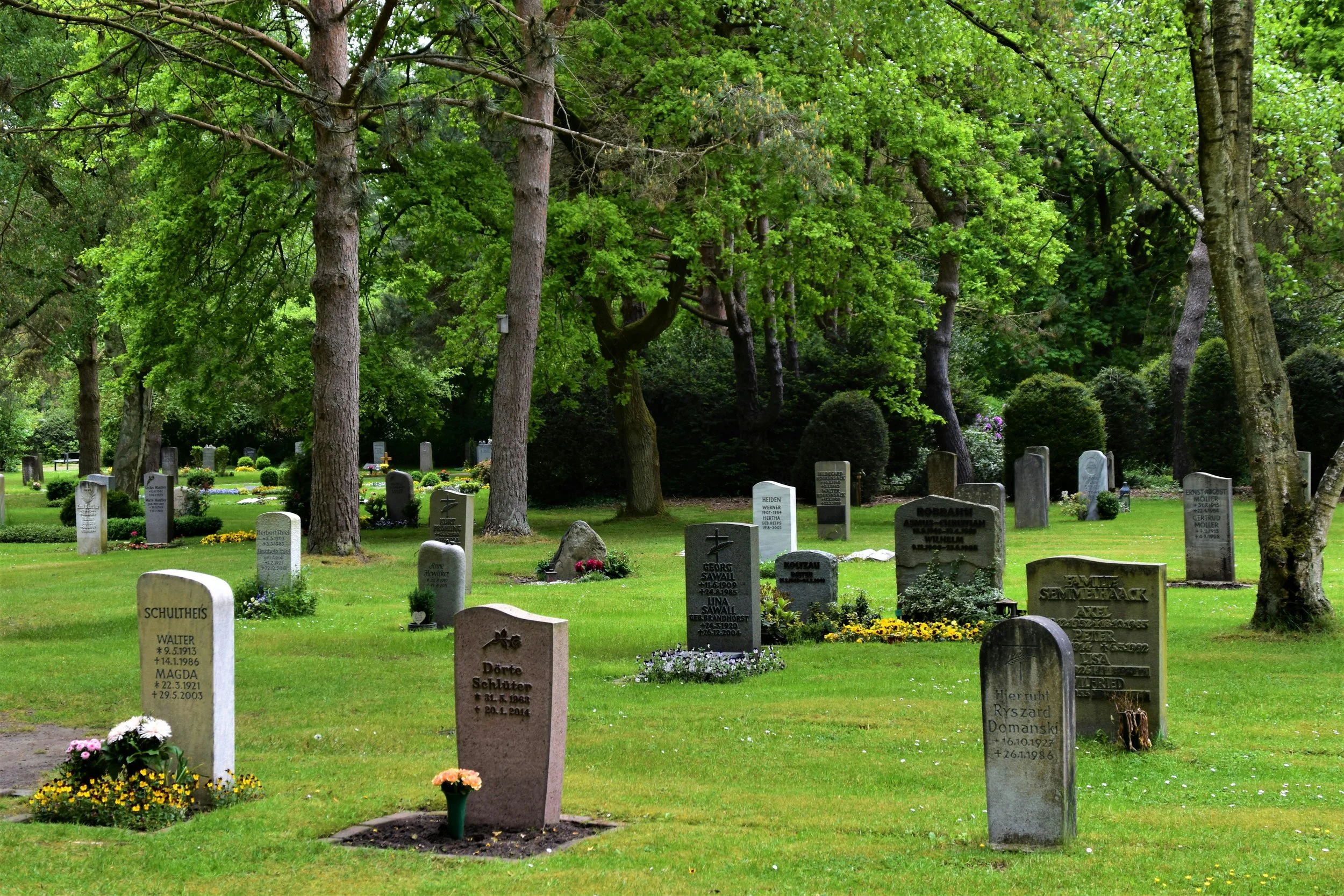
When we say living your dash we don't mean the race. What we mean by dash is that small line that sits between the day we're born and the day we die. Allow us to explain...
We're all going to die one day. We all know this is true, but it often feels like we're playing this little game where each of us says to ourselves, "yea, death is a thing that happens, but it isn't ACTUALLY going to happen to ME!"
(At least not any time soon that I have to worry about it.)
If you're honest with yourself, you probably think this way. We certainly do. We move through our days not really thinking about it, at least not until we encounter death in some personal way.
When an older family member passes away, it makes sense. They're getting older and this is what happens to people as they age. THEY die. Not me. THEM. The older ones.
When a friend falls ill or passes away, either suddenly or after a struggle with a disease, the reaction is different. The narrative that they're older doesn't work here. Instead it might become an assessment of lifestyle. They lived a hard life, ran an unhealthy or overly busy schedule, or perhaps it was just a case of bad luck. Again, it is them, something outside of us, and we quietly rationalize how this could have happened to them but not to us.
Then there are cases where someone younger dies. This is less common and often chalked up to recklessness, being in the wrong place at the wrong time, or once again labelled as bad luck in the case of an illness that claims someone far too young.
We've experienced all three of these losses in our lives, and suspect most of you reading this have as well.
We shouldn't be obsessed with the idea that death is coming all the time. But in trying to avoid thinking about it, we often forget to give time, space, thought and energy to what the life we're living is actually about.
Whitney attended a funeral a few days ago for a distant family member. She was older, but still too young, and her parents, both in their 90s, were living and present for the celebration of her life. In one of the tributes, the celebrant talked about birth and death and how those dates are marked with such importance. But in spite of their significance, they’re not things we can control or choose.
Have you thought about that before? The question itself feels strange, but let's explore it for a moment. We did. And perhaps, while you're reading this, take a moment and jot down a few notes for yourself.
Question 1: If you could choose, when would you prefer to be born?
For Greg, there is a romance to the middle ages, where honour mattered and battles were fought with swords and stuff (guilty pleasure TV). But there is also an allure to the 1800s when so much was being discovered for the first time.
For Whitney, there is something about the past that is attractive, but it also comes with the unavoidable question of whether life would really be her own to live, you know... being a woman and all. So there are moments in the 1900s that would be interesting, but ultimately the present time we're in feels pretty good.
This leads to the next question, one that is likely impossible to answer.
Question 2: If you could choose, when would you prefer to die?
Both of us shrug. The question itself feels uncomfortable and a bit ridiculous, and left us both saying something like 70 to 90 healthy years after we're born.
What a strange exercise. We hadn't really thought of it before, and wanted to share it with you too. Now... back to the funeral.
The celebrant continued on their point. While we emphasize the two dates so much, what truly matters is not when our lives start and end, but what we do in between. What we do in the dash.
He referred to it as living the dash. This is where our choices are. This is what we can control and influence along the way.
We may have preferences about when we'd like to be born or die, but we can't control either. The first has already happened, and for all of you reading this we hope the second is a very long way off.
But the moment we're in now is the dash. And if we're honest, much of our time is spent doing or worrying about things that really don't matter, pursuing things we'd likely not value (or even need).
This past week, Whitney and Cole were sick, lying on the couch, and chose to use that time to read a book together. They picked up an old favourite, Tuesdays with Morrie, and it was a perfect fit for this idea.
In case you haven't read it, Tuesdays with Morrie was written by Mitch Albom, and Morrie was his university professor who he'd lost touch with in the 15 to 20 years since graduating. When Mitch learned that Morrie was terminally ill with ALS, he flew to Boston to visit. When a writers strike hit at work, he decided to return weekly (on Tuesdays, of course) for what became Morrie’s final lectures on the meaning of life, which he captured in this book. It’s incredible.
At one point, Morrie says to Mitch, "In life, we're involved in trillions of little acts just to keep going. So we don't get into the habit of standing back and looking at our lives and saying, Is this all? Is this all I want? Is something missing?... You need someone to probe you in that direction. It won't just happen automatically."
Mitch then realizes that what Morrie is telling him is that we all need teachers in our lives. We really like this idea too.
While we're in the dash, we spend most of our time distracted. We're caught up in the stresses of the moment, pursuing things we think we want but likely won't like when we have them, and that certainly aren't things we need.
Funerals, illnesses and even injuries can serve as great teachers. They remind us about that second date and, if we're healthy, how lucky we are to be that way. They remind us that while we are alive and well, we still have choices about how we show up and what any moment can bring.
The point is not to leave anyone feeling depressed. Quite the opposite. There are no guarantees about what the future holds or how long it will be. And as we said earlier, until we're very old or very sick, most of us avoid thinking about that second date altogether.
But if you're reading this from anywhere other than your death bed, this might be one of those moments of reflection for you, just like the funeral was for Whitney, and just like reading that book has been for us. Taking time to slow down and step back from distractions reminds us that we have a choice about what living our dash looks like in this moment and in the next.
We didn't choose our first date and we can't choose our second. The only choices we have are reflected in the dash we are living in between.
Big questions like "are you happy with your life" or "what is one thing you'd change if you could" often sound inspiring, but they are too broad to create lasting change in how we live.
So instead, we'll leave you with this:
In the moments that follow reading this, what choices will you make about how they unfold? How will you live your dash today?